
Is terrorism's complex roots a multidimensional crisis born from statecraft in the shadow of global power

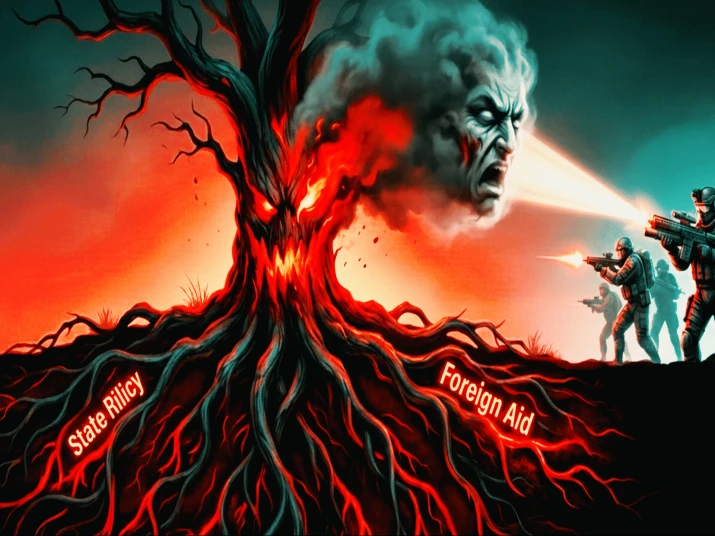
Table of Contents
- The complex roots of terrorism range from political politics to a multidimensional crisis born in the shadow of global power.
- State vs. Terrorism: The Trap of Misinterpretation Complicating Conflict in the Modern World!
- The State’s Traditional Response: What are the Results of Force and Militarization?
- Terrorism Strategy: A Psychological Game to Trap the State into Reaction
- Psychological Warfare: The Silent War and the Real Threat of the New World Order?
- Why do most states view terrorism as a direct threat?
- Fighting Terrorism: The Essentiality of Knowledge to Understand Public Opinion, Psychology, and State-Society Relations
The complex roots of terrorism range from political politics to a multidimensional crisis born in the shadow of global power.
Terrorism is not a simple phenomenon created by a single force, individual, or state. It is born from complex interrelationships at many levels. Where state policy, social environment, local politics, ideology, economic inequality, and the influence of international powers and foreign aid work together. How deep the roots of this terrorism are and how global the network is is hidden from the eyes of ordinary people. While each element may be intense or weak at a time, all together create an environment where extremism can easily take root.
When the state sees terrorism only as a “lethal weapon” or a visible threat, then its response naturally becomes power-dependent. But such a one-dimensional view often makes the problem more complex and long-lasting. Terrorism is not just an expression of weapons or violence. It is essentially a psychological-political process deeply related to people's minds, emotions, anger, sense of identity, and social reality. Therefore, although the use of force can sometimes bring temporary control, its underlying causes remain unresolved, which again gives rise to new conflicts.
For this reason, overgeneralization or oversimplification is always risky. In popular discourse, terrorism is often portrayed as a CIA “secret formula,” or a “Jewish-Nazi conspiracy,” or the result of “psychological warfare” by a particular state. But these claims are often flawed, partially informed, or politically motivated. The reality is that terrorism is not the product of a single force. Rather, it is the result of a complex interplay of multiple states, multiple social environments, local politics, ideologies, economic inequalities, and international forces.
For this reason, effective solutions to terrorism require more than just weapons or military force. A comprehensive understanding of social psychology, political history, economics, technology, and the dynamics of public opinion is needed. If the state fails to understand the anger, deprivation, identity crisis, and political reality of the people, harshness can only make the situation more unstable. So the antidote to terrorism is not just deterrence, but deep analysis, an understanding of public psychology, and integrated policy intelligence.
State vs. Terrorism: The Trap of Misinterpretation Complicating Conflict in the Modern World!
In today's world, terrorism is no longer limited to the traditional tactics of rattling weapons or bombings. Rather, it has gradually become a kind of "psychological catalyst". The purpose of which is more than direct damage. To shake the psychological structure of society and the state. Modern terrorism has understood that the easiest way to weaken the state is to break the trust of the people. And to deepen the socio-political divide.
For this reason, when attacks are viewed only from a military perspective, an important part remains invisible. Terrorist organizations want the state to overreact, using excessive force, curtailing civil rights, creating a culture of suspicion, or being harsh against certain groups. When the state reacts in such a way, the terrorists' objectives are more easily achieved. Mistrust of the state increases among the people, social distance increases, and political instability accelerates.
This process, on the one hand, breaks society through fear, and on the other hand, creates tension, distrust, and pressure to make quick decisions within the state. This is precisely where terrorism reaps its desired benefits. Because in a frightened and divided society, democratic values weaken, conflicts intensify in the political arena, and the adaptive capacity of the state system decreases.
Therefore, to understand contemporary terrorism, it is necessary to analyze in depth not only its weapons or the type of attacks. But also how its psychological and socio-political objectives work.
The State’s Traditional Response: What are the Results of Force and Militarization?
Many states deal with terrorism primarily as a military or security issue. But such a one-dimensional approach can have unintended consequences. First, the power of security forces increases disproportionately, sometimes overshadowing civilian administration. Second, the civil liberties of the people are curtailed: surveillance increases, the right to freedom of expression and association is limited, and a climate of distrust is created in society. Third, dissent or any dissent is easily perceived as a “risk” or “threat.” As a result, the normal scope for democratic debate narrows.
Through this process, administration gradually shifts from a “civil-centric” framework to a “security-centric” mindset. The state’s priority is security. But the definition of that security often becomes so broad and vague that ordinary citizens are also caught in the web of surveillance. As a result, a section of the population begins to feel that the state is behaving not as their protector, but as a potential enemy.
This is precisely where terrorist groups or violent instigators benefit the most. They know that the more the state shows its strength, the more anger will build up among the frightened or deprived. This anger becomes the main fuel for them to recruit new people, new support, and create new narratives.
Therefore, building an effective resistance to terrorism is not just about increasing the level of power. The state must simultaneously maintain the balance of protecting the trust, freedom, and dignity of the people. Herein lies the biggest challenge for policymakers.
Terrorism Strategy: A Psychological Game to Trap the State into Reaction
Groups that want to use terrorism as a strategic weapon understand this cycle of social psychology very well. Their goal is not to defeat the state directly. Rather, it is to force the state to respond in a way that sows the seeds of instability within society.
They know that the more the state uses force, the more public anger will grow. And the more polarized and distrustful society will become.
This anger, frustration, and division are the most powerful “fuels” for terrorist groups. They form the basis of their propaganda, recruitment, narrative, and political justification. When people begin to feel that the state is not listening to them, instead, it is behaving in a hostile manner, and extremist messages can easily take over.
Sometimes a small incident can push this stored anger to the point of explosion. police brutality, a loss of life in a botched operation, or the misconduct of security forces. A single incident can act as a spark. Images or videos circulating on social media instantly ignite emotions, and silent discontent can turn into intense public movements.
It is at these moments that extremist organizations become active. They look for opportunities to increase their presence in a divided society, to draw in the affected people. And to strengthen the anti-state narrative.
As a result, the fight against terrorism is not just about military or security. It is essentially a fight to protect society's emotions, trust, and sense of justice. Any wrong response can make that fight more difficult.
Psychological Warfare: The Silent War and the Real Threat of the New World Order?
Many powerful states in the world today use information warfare, psychological influence, social media manipulation, and narrative war. These techniques are used as part of state power. This is a reality of international politics. However, explaining these as a “secret formula” of a specific group or country oversimplifies reality. Behind such a complex process are many levels of politics, technology, history, and strategic interests, which cannot be explained in one line.
In analyzing modern terrorism or political instability, researchers therefore do not look at a single cause. Rather, they look at a multidimensional structure. According to them,
1. Social discontent: Deprivation, discrimination, or long-term frustration can push people towards extremism.
2. Political discrimination: The disenfranchisement or lack of representation of certain groups easily radicalizes anger.
3. Weak administrative institutions: Ineffective judiciary, corruption, or inefficient administration create distrust in the state.
4. Wrong security strategies: Excessive use of force, surveillance, or wrongly targeted operations. All these strengthen the propaganda of terrorists.
5. Information warfare: Confusion, rumors, and fake videos can quickly inflame these social emotions.
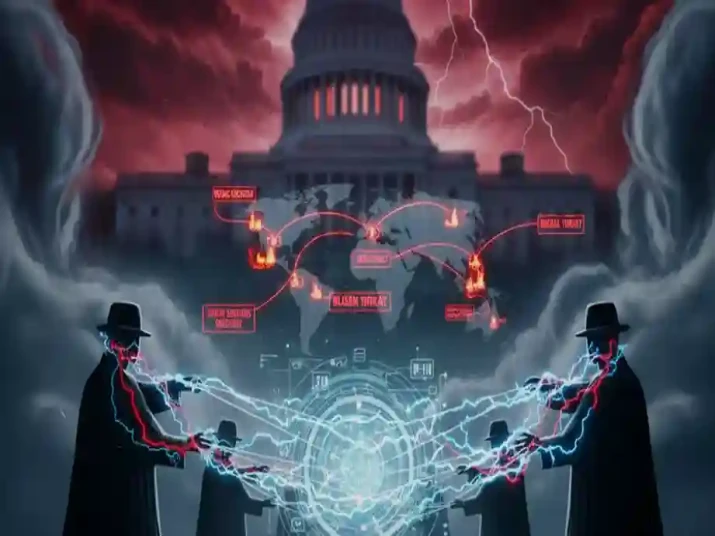
6. Foreign influence: In some cases, regional or international interests and politics can intensify internal crises.
All these elements together make terrorism effective as a “catalyst” or accelerator of instability. That is, terrorism does not create everything by itself. Rather, it ignites the fire within the existing anger, weakness, and inequality.
Therefore, to combat terrorism, a coordinated vision is needed not only on security but also on society, state, politics, and information flows.
Why do most states view terrorism as a direct threat?
Most states view terrorism as a kind of “immediate and visible threat.” As a result, their first response is security-focused and force-based. This response often takes three main forms.
1. Police crackdowns,
2. Increasing military capabilities,
3. Enforcing strict laws or security regulations.
In the short term, these may make the state appear stronger and more prepared. But in the long term, this has some complex side effects. As security tightens, civil liberties begin to shrink. Issues such as freedom of expression, personal privacy, or political dissent are easily seen as “risks.”
As a result, ordinary people become skeptical of the state. They begin to feel that excessive control is being imposed on them in the name of security. When this distrust grows in the minds of the public, social discontent and anger increase. As anger grows, the distance between the state and the people increases, and society becomes more fragile.
This situation creates fertile ground for terrorist or extremist instigators. Because they have been waiting for a long time for the state to take a wrong step. To use excessive force or to behave unfairly in an incident. Then they use that anger to create a new narrative. Get new supporters and strengthen their ideology.
In other words, if the state relies only on force and does not attach importance to social trust and fairness, then it itself creates pressure from within that makes the opponent's strategy more successful.
Fighting Terrorism: The Essentiality of Knowledge to Understand Public Opinion, Psychology, and State-Society Relations
The answer to the question of why knowledge is essential lies in the very nature of terrorism. Terrorism is not just a physical attack. Its most serious damage occurs at the psychological, social, and political levels. Therefore, its remedy must also come from the same level. Where public opinion is formed, emotions are created, and the basis of state-society relations is determined. For this reason, a combination of multidimensional knowledge and skills is needed.
Psychologists are needed to understand the dynamics of human fear, anger, frustration, and persuasion. Why does someone lean towards extremism, and under what circumstances does society quickly become agitated? Without these analyses, true prevention is not possible.
Sociologists identify divisions, inequalities, strained relationships, and crises of trust within society. Terrorism exploits the social breakdown. Where that breakdown is occurring cannot be understood without knowledge of sociology.
Political analysts identify the weaknesses of the state system, the flaws of governance, and the mistakes of policy-making. This often creates an environment for terrorism.
Cyber experts are valuable because today's information warfare, fake videos, rumor spreading, and digital incitement are now as important as the battlefield.
Communication strategists create accurate narratives, credible information, and messages capable of keeping people calm that weaken terrorist propaganda.
Local community leaders are the most important human pillars. They maintain people's trust, social cohesion, and peace, and build bridges between the state and society.
Together, these create a multi-dimensional, knowledge-based resistance structure. This weakens the very foundation of terrorism, not only with weapons, but also through understanding, dialogue, trust, and fairness.
Just as terrorism targets people's brains, emotions, and social perceptions. In the same way, its effective remedy must also be brain-based, knowledge-based, and analytical. The main power of terrorist tactics is not weapons. It is the ability to create fear, division, suspicion, and reactionary tendencies in people. Therefore, if the state only responds with force, it will ignore the real battlefield, the minds and emotions of the people and society.
To build an effective resistance to terrorism, it is not enough to rely on a single force or method. An integrated framework of three levels is needed: military, civilian, and social. Which, when working together, create a stable and knowledge-based defense.
The military level provides basic security. The skills, readiness, and rapid response of security forces, police, intelligence agencies, and law enforcement agencies. They deal with immediate threats, prevent violence, and maintain a stable security environment.
The civilian level works deeper. Through data analysis, policymaking, sociology, psychology, and political understanding. This level determines which policies will reduce tensions, which measures will increase trust. Which information will prevent confusion, and which strategies will break the narrative of extremists?
The social level is the level of people's hearts. Local leaders, teachers, religious leaders, youth organizations, community activists, and social influencers hold the place together. They spread the message of trust, solidarity, and peace, making society resistant to division.
When these three levels work together, it becomes clear. The solution is not through force alone. The solution is built on a combination of knowledge, understanding, and social cohesion. Such a structure is the real goal of terrorism. It fails to break up society and incite the state.
Tags
For Add Review. You Need To Login First Login Page

-
LATEST
-
POPULAR

What is marriage according to Sanatan Dharma and why is marriage called a bond of birth and rebirth?

The Sydney attack is also the result of the same petro-dollar, Pakistan and Deep State radical narratives.






Comments
No comments yet